15 Proven Ways to Reduce LTL Freight Costs in 2026
The 15 highest-leverage ways to reduce LTL freight costs in 2026 without cutting service quality. Density optimization, multi-carrier bidding, accessorial audits, freight class reclassification, and more.
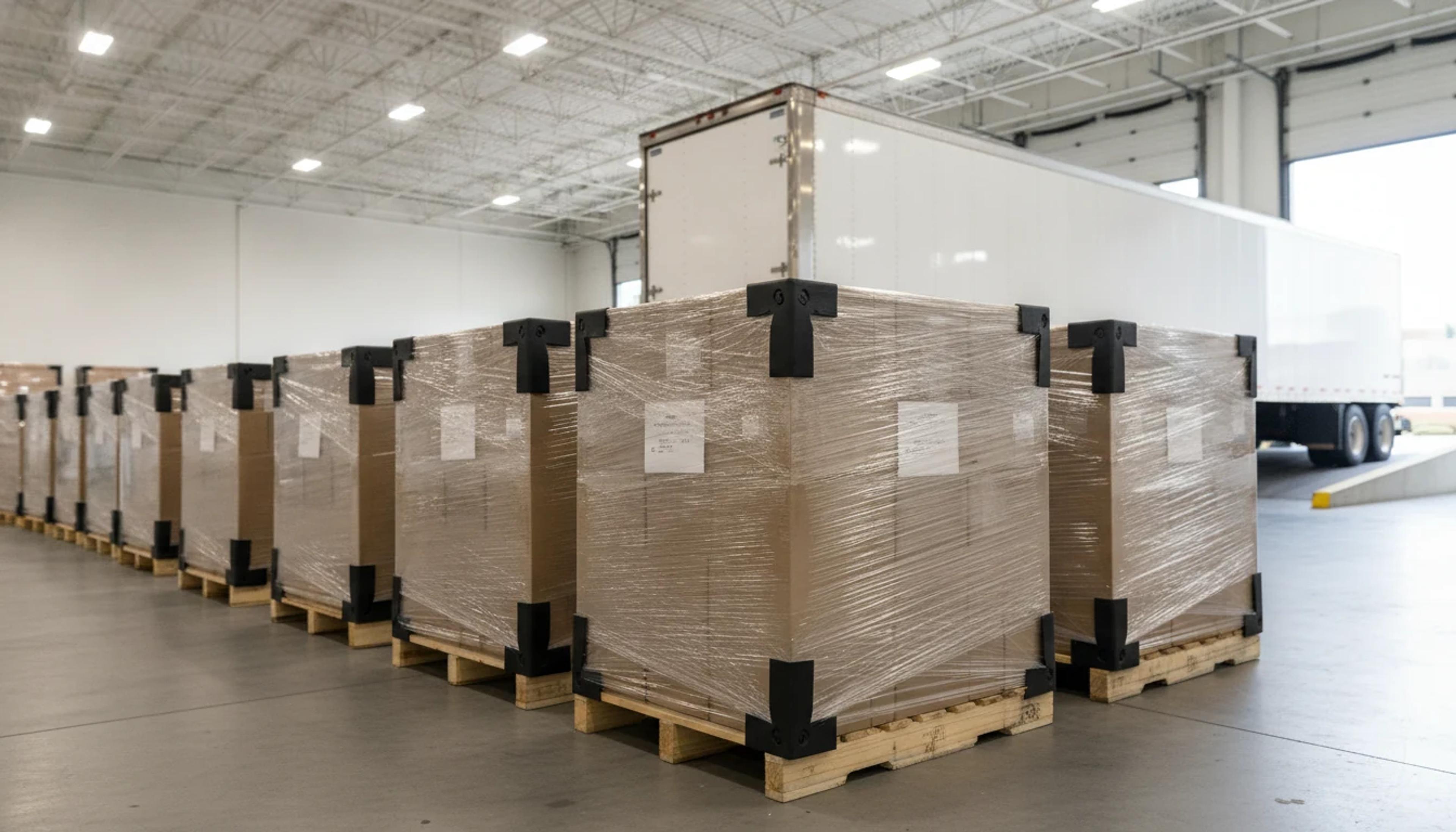
Table of contents
Loading...
Ways to reduce LTL Freight Costs in 2026
The 15 highest-leverage ways for US shippers to reduce LTL freight costs in 2026 are: (1) tender every shipment through multi-carrier bidding; (2) optimize density to drop freight class; (3) consolidate shipments to hit weight-break thresholds; (4) re-audit NMFC classifications under the new 2026 density-based system; (5) audit and renegotiate accessorial rate tables; (6) confirm delivery conditions at BOL creation to avoid reconsignment fees; (7) use terminal pickup where possible; (8) book non-critical freight midweek (Tuesday-Thursday); (9) use FedEx Freight Economy or equivalent service tiers for time-flexible freight; (10) audit fuel surcharge tariffs quarterly; (11) monitor GRIs and time negotiations around them; (12) use zone-skipping for high-volume long-haul moves; (13) evaluate intermodal for freight above 10,000 lb on long-haul lanes; (14) consolidate carrier count on your top lanes for volume discounts; and (15) audit freight invoices monthly against original quotes to catch billing errors (which affect 3-8% of US LTL invoices).

Key Takeaways
- Shippers who implement the top 5 practices below typically reduce LTL costs by 15-25% within 90 days without changing carriers or service levels.
- The single highest-leverage action is multi-carrier rate comparison on every shipment. Shippers who tender single-carrier lose 10-25% versus market on average.
- Density optimization (proper palletization + tight wrap) can drop freight class by one or two tiers, cutting the line-haul rate 15-30% on affected shipments.
- Accessorial tariffs rose 8-12% in the 2026 GRIs versus 4.9-5.9% line-haul GRIs. Auditing your top 20 accessorial-heavy lanes typically finds $2,000-8,000 monthly in avoidable overspend.
- Weight-break discounts trigger at 500 lb, 1,000 lb, 2,000 lb, and 5,000 lb thresholds. Combining shipments to hit the next break routinely saves 12-25% per shipment.
- The new 2026 NMFC density-based classification (Docket 2026-1 effective February 6, 2026) shifted many commodities to lower classes. Shippers who have not re-audited their top 20 SKUs are likely paying old-class rates on freight that should now price at lower classes.
- Payment terms and prepayment discounts can add another 1-4% savings on top of rate optimization if you have working capital to deploy on early-pay discounts.
1. Tender Every Shipment Through Multi-Carrier Bidding
The single highest-leverage action for most US shippers under 500 LTL shipments per year is to compare rates from 20 or more carriers on every shipment through a marketplace, rather than defaulting to a single house carrier. Rate spreads across carriers on the same lane are typically 25-45% in 2026, and no single carrier wins on every lane, service tier, and shipment class combination.
Typical savings: 10-25% per shipment on average.
2. Optimize Density to Drop Freight Class
Freight class in the 2026 density-based NMFC system is driven primarily by density (pounds per cubic foot). A shipment with dead space (empty top of the pallet) rates at the lower density and higher class. Tight shrink-wrap, corner protectors, and using the smallest suitable pallet can shift a shipment down one or two classes.
Typical savings: 15-30% on affected shipments (one class drop equals approximately 15-25% on line-haul).
3. Consolidate Shipments to Hit Weight-Break Thresholds
LTL rates step down at specific weight breaks: 500 lb, 1,000 lb, 2,000 lb, and 5,000 lb. Combining two 750 lb shipments into one 1,500 lb move can cut per-pound cost by 12-18% by crossing the 1,000 lb weight break into a lower rate tier.
Typical savings: 12-25% per shipment when consolidation is feasible.
4. Re-Audit NMFC Classifications Under the 2026 Density-Based System
NMFTA transitioned US LTL freight classification from a commodity-based to a density-based system on July 19, 2025, followed by 2026-1 Docket revisions on February 6, 2026 that expanded the density scale from 11 to 13 tiers (adding classes 50 and 55). Shippers who have not re-audited their top 20 SKUs are likely paying old-class rates on freight that should now price at lower classes.
Typical savings: 5-15% on affected SKUs after re-classification.
5. Audit and Renegotiate Accessorial Rate Tables
Accessorial fees rose 8-12% in 2026 GRIs, exceeding the 4.9-5.9% line-haul GRIs at the same carriers. For shippers with high accessorial-heavy volume (residential, liftgate, inside delivery), the accessorial rate table often exceeds the base rate table in financial impact. Most carriers offer 15-40% discounts on accessorial list tariffs to shippers with committed volume.
Typical savings: $2,000-8,000 monthly on accessorial-heavy volume.
6. Confirm Delivery Conditions at BOL Creation
Reconsignment fees ($85-165) apply when accessorials are added after pickup. Every un-flagged liftgate need discovered at delivery triggers both the liftgate fee and the reconsignment fee. Calling the consignee before BOL creation and confirming dock access and forklift availability eliminates approximately 80% of avoidable reconsignment charges.
Typical savings: $500-2,000 monthly for shippers with 100+ residential LTL shipments/month.
7. Use Terminal Pickup Where Possible
Most major US LTL carriers allow the consignee to pick up freight at the local terminal at no charge. For consignees receiving occasional freight (contractors, small retailers), a 15-30 mile drive to the terminal saves the full liftgate-plus-residential accessorial stack, typically $265-410 per shipment.
Typical savings: $265-410 per applicable shipment.
8. Book Non-Critical Freight Midweek
Monday pickups and Friday deliveries run 3-7% higher on average due to capacity pressure at the beginning and end of the week. Tuesday-Thursday pickups clear the network more easily and produce better rates on many carriers. For freight without a strict transit deadline, midweek booking reduces cost without reducing service.
Typical savings: 3-7% on affected shipments.
9. Use Economy or Deferred Service Tiers for Time-Flexible Freight
FedEx Freight Economy service (and equivalent economy tiers at other carriers) typically prices 8-15% below the standard Priority tier by adding one or two transit days. On freight where two extra days do not matter, the discount is essentially free savings.
Typical savings: 8-15% on affected shipments.
10. Audit Fuel Surcharge Tariffs Quarterly
Every LTL carrier calculates fuel surcharge on the DOE On-Highway Diesel index with a one-week lag, but the multiplier and step function vary. Some carriers apply the surcharge to base freight only, others apply it to base plus accessorials. On an $800 shipment with $200 accessorials, this difference alone is $30-60 per shipment. Quarterly audits of fuel surcharge application across your top carriers typically identify $1,000-3,000 in monthly savings for mid-volume shippers.
Typical savings: $1,000-3,000 monthly for mid-volume shippers.
11. Monitor GRIs and Time Negotiations Around Them
Major US LTL carriers announce annual General Rate Increases (GRIs) in Q4 for the following year, typically effective January or February. 2026 GRIs ranged from 4.9% (ODFL) to 5.9% (FedEx Freight, ABF, Saia). Shippers who lock multi-year contracts before the GRI cycle and negotiate accessorial caps effectively hedge the annual increase.
Typical savings: 2-5% annually on locked lanes.
12. Use Zone-Skipping for High-Volume Long-Haul
Zone-skipping consolidates multiple LTL shipments to a distant zone into a single truckload move (or partial truckload) to that zone, then splits them into local deliveries at destination. For shippers with 500+ lb weekly volume to a single destination zone, zone-skipping typically saves 20-35% versus tendering each shipment separately as LTL.
Typical savings: 20-35% on affected volume.
13. Evaluate Intermodal for 10,000+ lb Long-Haul Freight
For freight over 10,000 lb on lanes over 800 miles, intermodal (truck-to-rail-to-truck) typically prices 15-30% below equivalent truckload or heavy LTL. Diesel at $5.64 per gallon in Q2 2026 has widened the intermodal versus truck cost gap, making the analysis worth revisiting even for shippers who dismissed it a year ago.
Typical savings: 15-30% on qualifying volume.
14. Consolidate Carrier Count on Top Lanes for Volume Discounts
Beyond a certain shipment volume, LTL carriers offer committed-volume discounts that beat marketplace rates. For shippers with 200+ shipments per year on a single lane, consolidating that volume to one or two carriers unlocks 8-20% discounts off marketplace rates. The tradeoff is single-carrier dependency risk, so build in a marketplace fallback for overflow.
Typical savings: 8-20% on high-volume lanes.
15. Audit Freight Invoices Monthly Against Original Quotes
US LTL invoice error rates are estimated at 3-8% (industry surveys). Common errors: incorrect freight class applied, accessorials billed that were not delivered, fuel surcharge miscalculation, weight rounding. Monthly audits by a freight bill auditor (internal or third-party) recover 2-4% of total spend on average.
Typical savings: 2-4% of total annual LTL spend, essentially free money.
Summary Savings Table
| # | Practice | Typical savings | Effort |
|---|---|---|---|
| 1 | Multi-carrier bidding | 10-25% | Low (marketplace subscription) |
| 2 | Density optimization | 15-30% on affected | Medium (operational) |
| 3 | Weight-break consolidation | 12-25% | Medium (planning) |
| 4 | NMFC re-audit under 2026 rules | 5-15% on affected SKUs | Medium (one-time) |
| 5 | Accessorial renegotiation | $2K-8K/month | Medium (negotiation cycle) |
| 6 | BOL condition confirmation | $500-2K/month | Low (process change) |
| 7 | Terminal pickup where feasible | $265-410/shipment | Low (case by case) |
| 8 | Midweek booking | 3-7% | Low (scheduling) |
| 9 | Economy service tiers | 8-15% | Low (service tier flag) |
| 10 | Fuel surcharge audit | $1-3K/month | Medium (quarterly review) |
| 11 | GRI timing | 2-5% annually | Medium (contract cycle) |
| 12 | Zone-skipping | 20-35% on affected | High (setup) |
| 13 | Intermodal for 10K+ lb long-haul | 15-30% on affected | Medium (lane by lane) |
| 14 | Volume consolidation on top lanes | 8-20% | Medium (contract cycle) |
| 15 | Monthly invoice audits | 2-4% of total spend | Low (automated) |
Frequently Asked Questions
How can I reduce LTL shipping costs?
The 5 highest-leverage LTL cost-reduction practices in 2026 are: (1) tender every shipment through multi-carrier bidding, (2) optimize density to drop freight class, (3) consolidate shipments to hit weight-break thresholds, (4) re-audit NMFC classifications under the 2026 density-based system, and (5) audit and renegotiate accessorial rate tables.
How much can I save by using a freight marketplace?
US shippers under 500 LTL shipments per year who move from single-carrier tendering to multi-carrier marketplace bidding typically save 10-25% per shipment on average. Rate spreads across carriers on the same lane are 25-45% in 2026 and no single carrier wins on every lane and service tier.
What is the biggest driver of LTL freight cost?
Freight class (density-based since July 2025) drives the base rate more than any other single factor. A one-class shift (say, class 100 to class 85) reduces the line-haul rate 15-25% for the same lane and weight. Weight break is the second-largest driver.
How do I lower my freight class?
Increase density (pounds per cubic foot) by tight palletization, minimal dead space, using the smallest suitable pallet size, and shrink-wrapping firmly. Under the 2026 NMFC density-based system, commodities without special handling requirements are classified purely by density.
Do accessorial fees really add that much?
Yes. On residential deliveries with liftgate and inside service, accessorials often exceed the base rate, adding $385-545 per shipment. On commercial dock-to-dock moves, accessorials typically add 15-25% of total landed cost.
What is the cheapest LTL carrier?
There is no single cheapest carrier because rates vary by lane, service tier, and freight class. On any given shipment, TForce Freight, Saia, Estes, or a regional carrier typically wins on price, but which one specifically depends on the lane. Multi-carrier comparison is the durable way to identify the cheapest option per shipment.
How much does a freight audit save?
Monthly LTL freight invoice audits typically recover 2-4% of total annual LTL spend by catching billing errors (misapplied freight class, un-delivered accessorials, fuel surcharge miscalculations). Industry error rates are estimated at 3-8% of invoices.
Is intermodal cheaper than LTL?
For freight over 10,000 lb on lanes over 800 miles, intermodal typically prices 15-30% below equivalent truck options. Below those thresholds LTL is usually cheaper due to intermodal overhead (drayage on both ends, longer transit).
How often should I renegotiate LTL rates?
At minimum annually, timed around the carrier General Rate Increase (GRI) cycle (typically Q4 announcement, Q1 effective date). Shippers with growing volume should renegotiate every 6 months to reflect the new volume in tier pricing.
Can I negotiate accessorial fees?
Yes for shippers with sufficient volume. Carriers commonly offer 15-40% discounts on accessorial list tariffs to shippers with committed volume above 500 LTL shipments per year on their network.
Bottom Line for US LTL Shippers
The 15 practices above are compound, not alternative. Shippers who implement the top 5 (multi-carrier bidding, density optimization, weight-break consolidation, NMFC re-audit, accessorial renegotiation) typically reduce total LTL costs by 15-25% within 90 days. Adding the process practices (BOL condition confirmation, midweek booking, service tier flexibility) usually adds another 5-10% within 180 days. The auditing and structural practices (invoice audits, fuel surcharge audits, GRI timing) sustain the gains.
Start with a multi-carrier LTL quote across 20+ carriers in 30 seconds at freightrate.com/freight-calculator.
- FreightRate.com Editorial Team|Last updated: July 7, 2026