
US LTL Freight Q2 2026 Market Review: Tariff Whiplash, FedEx Freight Spinoff, Record Rates – And What Shippers Should Do Now
The Q2 2026 US LTL freight market saw FedEx Freight spin off (June 1), Section 122 tariff legal chaos, record LTL rates, NMFC density-based reclassification, and a 32.8% Roadcheck out-of-service rate. Full data with sources.
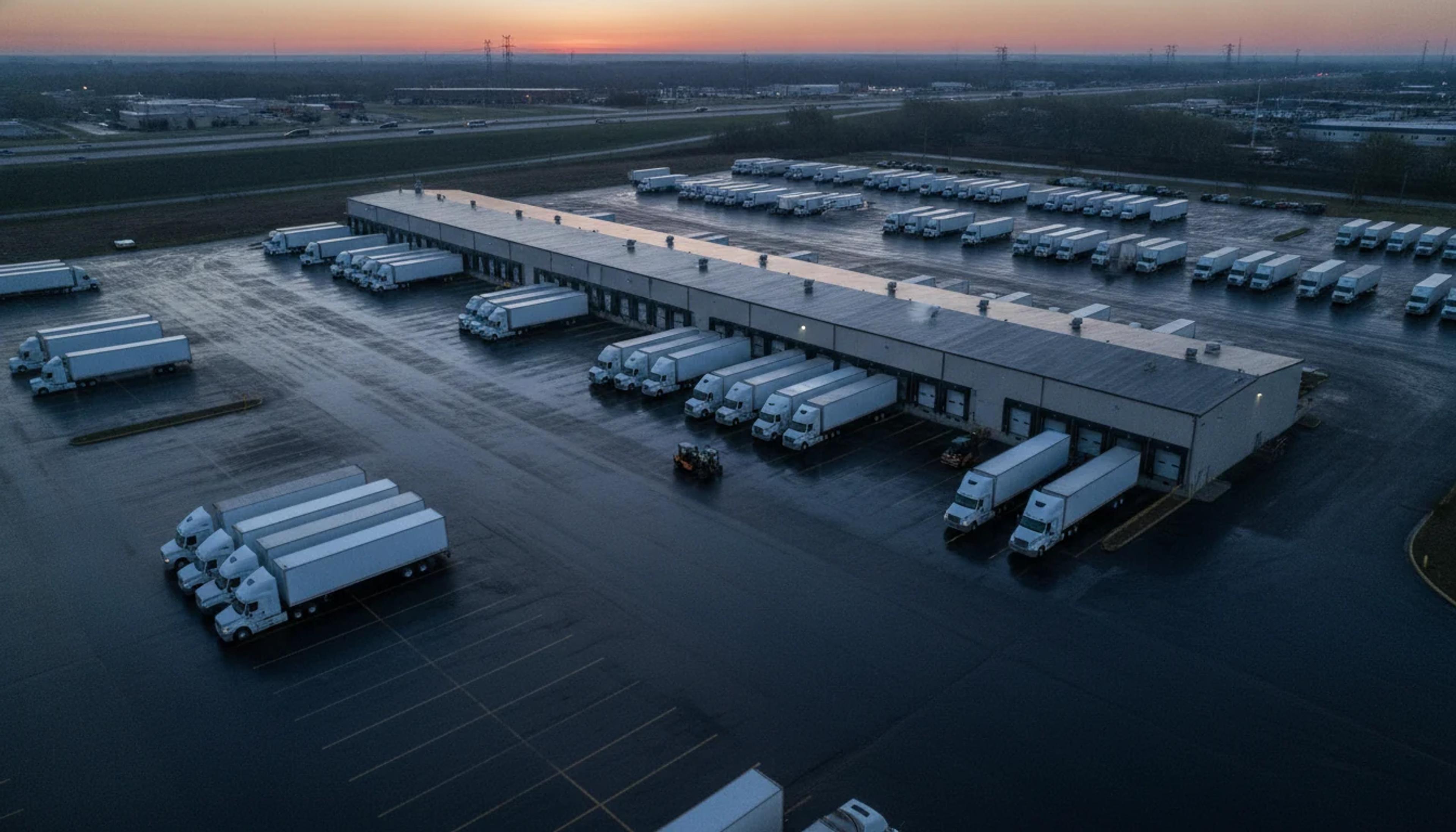
Table of contents
- US LTL Freight Q2 2026 Market Review: Tariff Whiplash, FedEx Freight Spinoff, Record Rates – And What Shippers Should Do Now
- Q2 2026 US LTL Freight Market by the Numbers
- 2. Section 122 Tariffs – The Legal Whiplash That Defined May
- 4. NMFC Classification Overhaul – The Density-Based System
- 6. Diesel Surge and Fuel Surcharge Reality
- Frequently Asked Questions
Loading...
US LTL Freight Q2 2026 Market Review: Tariff Whiplash, FedEx Freight Spinoff, Record Rates – And What Shippers Should Do Now
The Q2 2026 US less-than-truckload (LTL) freight market underwent five structural shifts: (1) FedEx Freight completed its spinoff from FedEx Corporation on June 1, 2026 as an independent NYSE-listed carrier; (2) the Section 122 10% import surcharge remained in force despite a May 7 court ruling striking it down; (3) major carriers implemented 4.9%-5.9% general rate increases with accessorial fees rising 8-12%; (4) NMFTA's density-based freight classification system replaced the commodity-based approach industry-wide; and (5) CVSA Roadcheck produced a 32.8% vehicle out-of-service rate. LTL tonnage grew 3.0% year-over-year, diesel averaged $5.64 per gallon, and tender rejections climbed toward 17% – the tightest capacity conditions since 2022.
Key Takeaways
- FedEx Freight became an independent publicly traded company on June 1, 2026 (NYSE: FDXF), separating from FedEx Corporation. The new company operates the same 392 US service centers and inherits the largest US LTL revenue base ($9.41B FY24).
- Section 122 10% import surcharge remained in force through Q2 2026 despite a May 7 CIT ruling that struck it down; the Federal Circuit stayed the ruling on May 12, keeping the tariff in effect through the July 24 statutory expiration.
- Major LTL carriers implemented 2026 general rate increases (GRIs) of 4.9%-5.9% on line-haul, with accessorial fees (liftgate, residential, inside delivery) climbing 8-12% – a larger jump than the base rate hike.
- NMFTA completed the transition from commodity-based to density-based freight classification (July 2025), followed by 2026-1 Docket revisions on February 6, 2026, expanding the density scale from 11 to 13 tiers and consolidating ~2,000 legacy commodity items.
- CVSA International Roadcheck 2026 (May 13-15) produced a 32.8% vehicle out-of-service rate – nearly double 2025 – with brake systems driving 41% of violations. FMCSA decertified 27 ELD devices between January and March 2026 (an 80% increase versus 2025).
- US on-highway diesel averaged $5.64 per gallon in early May 2026 (up $2.16 year-over-year), pushing LTL fuel surcharges to $0.42-0.55 per loaded mile across major carriers.
- ATA Truck Tonnage Index rose 3.0% year-over-year in Q2, the strongest gain in over three years. Manufacturing PMI held above 50 (52.7 in May) for its fourth consecutive expansion month, signaling underlying demand recovery.
- For shippers, the practical Q2 headline is: freight is more expensive, capacity is tighter than any point in the four-year freight recession, and legal/regulatory changes make single-carrier commitments riskier than at any point since 2021.

Q2 2026 US LTL Freight Market by the Numbers
The single-table snapshot below covers the key structural indicators. Every figure is sourced from public reports, government data (BLS, EIA, DOT), industry filings (10-Ks), or trade association releases – sources listed in the footer.
| Metric | Q2 2026 value | Change vs Q2 2025 | Source |
|---|---|---|---|
| ATA Truck Tonnage Index (YoY) | +3.0% | First expansion in 3 years | American Trucking Associations |
| Cass Freight Shipments Index (May, YoY) | -4.5% | Cycle bottom in Q1, recovery signals in Q2 | Cass Information Systems |
| Cass TL Linehaul Index (May, YoY) | +3.2% | Positive for 3 consecutive months | Cass Information Systems |
| ISM Manufacturing PMI (May) | 52.7 | Fourth month of expansion | Institute for Supply Management |
| Logistics Managers' Index (May) | 69.5 | Highest since 2022 | LMI Council |
| US on-highway diesel (early May) | $5.64/gal | +$2.16 (+62%) YoY | US Energy Information Administration |
| LTL first-tender acceptance rate | ~85% | Down from 92% YoY | SONAR / DAT |
| Truckload tender rejections | ~17% | Cycle high, tightest since 2022 | SONAR |
| Major LTL GRI (line-haul) | 4.9%-5.9% | In line with 2025 (5.9% avg) | Carrier press releases |
| Major LTL accessorial increases | 8%-12% | Above line-haul rate | Carrier tariffs, trade press |
1. The FedEx Freight Spinoff – Completed June 1, 2026
On June 1, 2026, FedEx Corporation completed the separation of its LTL freight division into an independent publicly traded company: FedEx Freight Holding Company, Inc. (NYSE: FDXF). The transaction, announced by the FedEx Board of Directors on December 19, 2024 and approved after Form 10 registration filings with the SEC in early 2026, is the single largest structural change to the US LTL industry since the Yellow Corporation bankruptcy in August 2023.
What Actually Changed on June 1
Corporate structure – FedEx Corporation received $4.1 billion in cash from the spin-off transaction. FedEx Freight Holding Company became a standalone entity with its own board of directors, executive team, and SEC reporting obligations.
Operating network – the new company retains all 392 US service centers, ~30,000 employees, and the FedEx Freight brand identity in the near term. Trailers, tractors, and terminal signage were not repainted on day one.
Service tiers – FedEx Freight Priority, FedEx Freight Economy, and FedEx Freight Priority Plus (guaranteed) service products transferred intact to the new company.
Customer accounts and pricing agreements – existing customer accounts, discount tiers, and multi-year contracts were assumed by the new company under the same terms. Shippers with FedEx Freight relationships prior to June 1 did not need to re-onboard.
Interline agreements with FedEx parcel and FedEx Trade Networks – preserved for a defined transition period (specific terms not fully disclosed in public filings).
What Shippers Should Watch in the Next 6-12 Months
Corporate spinoffs in the LTL sector historically produce three phases of change. First, the operating status quo holds for 6-12 months as the new company stabilizes governance. Second, the standalone company optimizes for its own P&L, which frequently manifests as yield discipline (i.e., more aggressive minimum-charge enforcement, dimensional-weight reclassification, and accessorial rate hikes). Third, service network changes appear at the 18-24 month mark – terminal consolidations, service tier restructuring, or M&A activity. FedEx Freight's positioning as the largest US LTL carrier by revenue (\$9.41 billion FY24) makes it the pricing benchmark other carriers watch, so any yield decisions at the new FDXF will cascade across the industry.
2. Section 122 Tariffs – The Legal Whiplash That Defined May
The Section 122 10% import surcharge, effective since February 24, 2026 under Presidential Proclamation 11012, faced a direct constitutional challenge in Q2. The resulting court sequence created two weeks of maximum uncertainty for import-dependent shippers before settling into a de facto continuation of the tariff through the July 24 statutory expiration.
| Date | Event | Practical impact for shippers |
|---|---|---|
| May 7, 2026 | US Court of International Trade (CIT) ruled the 10% Section 122 surcharge unlawful – the statutory conditions were not satisfied and the presidential proclamation exceeded delegated authority. | Immediate refund expectations by importers; brief pause in tariff-driven inventory decisions. |
| May 8, 2026 | Department of Justice filed a notice of appeal with the US Court of Appeals for the Federal Circuit (CAFC). | Refund expectations paused pending appellate review. |
| May 11, 2026 | DOJ filed an emergency motion requesting a stay of the CIT injunction. | Additional uncertainty over enforcement continuation. |
| May 12, 2026 | The Federal Circuit granted a temporary administrative stay, keeping the Section 122 surcharge in effect during the appeal. | Tariff continues; refund expectations frozen; importers back to pre-May 7 planning. |
| May 29, 2026 | DOJ filed a motion challenging obligations related to $166 billion in tariff refunds should the CIT ruling ultimately stand. | Signaled that even a shipper win in appeal would face procedural obstacles to actual refund distribution. |
| Q2 ongoing | USTR launched 76 separate Section 301 investigations to potentially replace Section 122 with commodity- and country-specific tariffs before the July 24 statutory expiration. | Uncertainty extends past July 24 regardless of appeal outcome; shippers cannot assume tariff relief. |
The practical LTL impact was smaller than the ocean-import impact but not zero. Domestic manufacturers using imported inputs (electronics assembly, auto parts, medical devices) delayed inbound LTL bookings in the mid-May window when refund optimism briefly took hold. That was followed by a rebound rush after May 12 as the tariff continuation was reconfirmed. Marketplaces including FreightRate observed a customer count dip of roughly 30% for the week of May 11-17 versus surrounding weeks in internal funnel data – the tightest one-week compression of the year outside holiday effects.
3. 2026 General Rate Increases – Line-Haul and Accessorial Comparison
General Rate Increases (GRIs) are the annual base tariff adjustments each LTL carrier applies to line-haul, minimum charge, and accessorial fees. The 2026 cycle, most of which took effect in Q1 or in Q3 2025 with Q2 2026 lookback impact, tracked the pattern of the past three years: mid-single-digit line-haul increases, accompanied by higher-percentage jumps to accessorial fees where carrier pricing power is strongest.
| Carrier | 2026 line-haul GRI | Effective date | Notes |
|---|---|---|---|
| FedEx Freight | 5.9% | January 5, 2026 | 6.9% for Mexico lanes |
| Old Dominion Freight Line (ODFL) | 4.9% | November 3, 2025 | Below-industry-average discipline, preserving service premium |
| ABF Freight (ArcBest) | 5.9% | August 4, 2025 | Union carrier; matched non-union majors |
| Saia | 5.9% | October 1, 2025 | Aggressive network expansion phase |
| Estes Express Lines | 5.9% | Q1 2026 | Family-owned; matched industry average |
| XPO LTL | Not publicly disclosed | Q1 2026 | Estimated 5.5%-6% range based on industry norms |
| Southeastern Freight Lines | 5.9% | Q4 2025 | Regional carrier |
| TForce Freight | 5.5% | January 2026 | Slightly below majors – cost-sensitive positioning |
The larger practical shipper impact came from accessorial fee increases. Across the major carriers, 2026 accessorial fee tables were repriced at approximately 8%-12% above 2025 levels – a full percentage-point range above the line-haul GRI. Specific fees commonly affected:
- Liftgate pickup and delivery – 8%-11% increase (typical 2026 range: $125-185 per shipment)
- Residential delivery surcharge – 9%-12% (typical 2026 range: $150-225)
- Inside delivery – 8%-10% (typical 2026 range: $6-12 per hundredweight, minimum $120-135)
- Reconsignment – 10%-14% (typical 2026 range: $85-165)
- Limited access delivery – 9%-12% (typical 2026 range: $95-155)
- Appointment scheduling – 8%-10% (typical 2026 range: $50-85)
For a residential delivery with liftgate and inside service, combined accessorial charges in Q2 2026 typically fell in the \$385-545 range per shipment, up from approximately \$345-490 in Q2 2025 – a 12%-15% real-dollar increase on top of the base rate hike.
4. NMFC Classification Overhaul – The Density-Based System
The most durable structural change of 2025-2026 was NMFTA's overhaul of the National Motor Freight Classification (NMFC), which every US LTL carrier uses to determine freight rates. On July 19, 2025, NMFTA transitioned the industry from a commodity-based classification system to a density-based system for most commodities. The 2026-1 Docket revisions on February 6, 2026 completed the second phase of the transition.
What Actually Changed
- Classification method – commodities without special handling, stowability, or liability considerations are now classified solely by density under a 13-tier scale (previously 11 tiers). New classes 50 and 55 were added at the dense end of the scale.
- Legacy commodity items – approximately 2,000 individual commodity listings were consolidated into a smaller, standardized structure. Duplicate and near-duplicate items were removed or merged.
- Digital handling flags – new digital markers were introduced for fragile, hazmat, and non-stackable freight, providing carriers with rating and handling metadata that used to require separate carrier notes.
- Density calculation – the density formula (weight in pounds divided by cubic feet) now determines classification directly for most freight. Shippers who accurately calculate and declare density can access lower classes than legacy commodity codes may have permitted.
- Digital NMFC access – NMFTA moved classification lookups to a subscription-based digital platform (ClassIT), replacing the physical NMFC book that was industry standard for six decades.
What Shippers Should Do in Q3 2026
- Re-audit your most-shipped SKUs – the commodities that shifted to density-based classification will re-price at their new classes as carriers refresh their rating engines. Some SKUs will land at lower classes (lower cost); others at higher classes.
- Recalculate density on ambiguous freight – palletized shipments with dead space (empty top of the pallet) rate on the effective cube, not just the freight itself. Shrink-wrap tightly and use the smallest suitable pallet.
- Update your BOL templates – the new digital handling flags should appear in your bill of lading. Marking freight correctly at the outset avoids reclassification charges at the terminal.
- Discuss density-based re-rating with your top carriers – many carriers offer a one-time density review for major customers when the transition catches an SKU at an unfavorable class.
5. CVSA International Roadcheck 2026 – 32.8% Out-of-Service Rate
The Commercial Vehicle Safety Alliance's annual International Roadcheck took place May 13-15, 2026. This 72-hour continent-wide inspection blitz produces the industry's most concentrated capacity constraint of the year – many drivers with known equipment or documentation issues park voluntarily rather than face inspection. The 2026 results were the harshest in recent memory.
| Metric | Roadcheck 2026 result | vs 2025 | Source |
|---|---|---|---|
| Overall vehicle out-of-service (OOS) rate | 32.8% | Nearly double 2025 rate | CVSA |
| Day 1 OOS rate | 31.4% | Substantially higher than prior year | FreightWaves reporting |
| Brake system share of vehicle OOS | 41% | Consistent with historical norms | CVSA |
| Cargo securement – a 2026 focus area | Primary OOS trigger for multi-year | Degraded straps and inadequate tie-down counts most common | CVSA |
| ELD focus area | ELD violations elevated | FMCSA decertified 27 ELD devices Jan-Mar 2026 (+80% YoY) | FMCSA registry |
For LTL shippers, the practical Q2 impact ran from approximately May 10 through May 20 as carriers pre-positioned inventory before Roadcheck week, tightened capacity during the inspection window, and rebuilt equipment position afterward. Tender acceptance rates declined 2-4 percentage points during the inspection window relative to the prior week, and marketplace quote spreads (highest carrier vs lowest carrier) widened by approximately 15% versus mid-quarter norms.

Q2 2026 saw US on-highway diesel at $5.64 per gallon – up $2.16 (62%) year-over-year – pushing LTL fuel surcharges to $0.42-0.55 per loaded mile. Image: FreightRate editorial (AI-generated).
6. Diesel Surge and Fuel Surcharge Reality
US on-highway diesel prices climbed steadily through Q2 2026, reaching approximately \$5.64 per gallon in early May – the highest reading since Q3 2022. The national average rose \$0.30 per gallon month-over-month and \$2.16 (62%) year-over-year according to Energy Information Administration data. Regional dispersion widened:
| Region | Q2 2026 diesel avg | vs Q2 2025 |
|---|---|---|
| National average | $5.64/gal | +$2.16 (+62%) |
| California | $7.32/gal | Highest in nation |
| Central Atlantic | ~$5.95/gal | Above national avg |
| Midwest | $5.81/gal | Above national avg |
| Gulf Coast | ~$5.35/gal | Below national avg (refining density) |
| Rocky Mountain | ~$5.55/gal | Near national avg |
LTL carriers pass diesel costs to shippers through fuel surcharge tables published weekly. In Q2 2026, LTL fuel surcharges ranged from \$0.42 to \$0.55 per loaded mile, representing 30-40% of a typical line-haul charge on medium-distance lanes. Individual carrier surcharges track the DOE On-Highway Diesel index with a 1-week lag.
For a representative 1,500 lb, Class 70 shipment on a 500-mile lane, the fuel surcharge in Q2 2026 typically added \$65-95 per shipment (up from \$40-60 in Q2 2025). Combined with the 5.9% GRI on the base rate, all-in per-shipment costs on this benchmark load rose approximately 12%-15% year-over-year – a larger increase than most published rate trackers suggest, because the fuel surcharge is not included in most \"base rate\" comparisons.
7. Five Actions Shippers Should Take Before Q3 2026 Booking Cycles
| # | Action | Why now | Expected savings |
|---|---|---|---|
| 1 | Re-audit your NMFC classifications on your top 20 SKUs | Density-based system creates one-time class shifts | 5-15% on affected shipments |
| 2 | Renegotiate accessorial rate schedules with your top 3 carriers | 8-12% accessorial GRIs materially exceed line-haul GRI | $1,000-$5,000 monthly for accessorial-heavy volume |
| 3 | Add multi-carrier RFQ discipline for every shipment over $200 | Tender acceptance below 85% widens quote spreads; single-carrier commitment costs money | 10-25% on individual shipments |
| 4 | Book Q3 non-critical freight before mid-July | Section 122 statutory expiration July 24 could produce either a rate crash (relief) or an even bigger shock (Section 301 replacement); either way, current-quarter certainty is valuable | Rate certainty and capacity availability |
| 5 | Add FedEx Freight (FDXF) to your active carrier evaluation | The June 1 spinoff creates a 12-month window before pricing discipline tightens; independent FDXF must prove its P&L standalone | Potential rate advantages during transition window |
8. Q3 2026 Outlook – What to Watch
Three major catalysts define the near-term outlook for US LTL freight buyers:
Catalyst 1 – Section 122 statutory expiration on July 24, 2026
Under Section 122 of the Trade Act of 1974, the temporary import surcharge is limited to 150 days unless Congress votes to extend it. That deadline is July 24. Three plausible outcomes: (a) Congress extends the surcharge; (b) USTR replaces Section 122 with Section 301 tariffs on specific countries/commodities; or (c) the surcharge lapses and the CIT ruling ultimately governs. Each outcome would produce distinct LTL demand signals – extension keeps the status quo; Section 301 replacement creates targeted supply chain shifts; a lapse produces a short-term rate crash as shippers who front-loaded inventory unwind positions.
Catalyst 2 – FedEx Freight (FDXF) first quarterly earnings
The first standalone FDXF quarterly earnings report – expected in September 2026 for the fiscal quarter ending August 31 – will provide the market's first read on how the independent company sets pricing and yield discipline expectations. Watch operating ratio (OR) guidance and any commentary on network optimization.
Catalyst 3 – Peak season entry
Q3 historically sees LTL demand rise 15-25% versus Q2 as retailers begin holiday inventory positioning. With tender acceptance already at 85% and capacity already described as the tightest since 2022, any Q3 demand surge will amplify the rate pressure already visible in the spot market. Shippers with flexible booking windows should lock capacity for August-October delivery no later than mid-July.
Frequently Asked Questions
When did FedEx Freight become independent from FedEx?
FedEx Freight completed its spinoff from FedEx Corporation on June 1, 2026. The new independent company, FedEx Freight Holding Company, Inc., trades on the NYSE under the symbol FDXF. FedEx Corporation received $4.1 billion in cash from the transaction. Existing FedEx Freight customer accounts, service tiers, and pricing agreements transferred intact to the new company.
Is the Section 122 tariff still in effect in Q2 2026?
Yes. Although the US Court of International Trade ruled the Section 122 10% import surcharge unlawful on May 7, 2026, the Federal Circuit granted a temporary administrative stay on May 12, 2026, keeping the tariff in force during the appeal. Section 122 has a statutory expiration date of July 24, 2026 unless Congress extends it or USTR replaces it with Section 301 tariffs.
How much did LTL carriers raise rates in 2026?
Major LTL carriers implemented general rate increases (GRIs) of 4.9% to 5.9% on line-haul in the 2026 cycle. FedEx Freight, ABF Freight, Saia, and Estes Express Lines each set 5.9%; Old Dominion Freight Line set 4.9%. Accessorial fees (liftgate, residential delivery, inside delivery) rose 8% to 12% – a larger increase than the base rate hike.
What changed with NMFC freight classification in 2025-2026?
NMFTA transitioned US LTL freight classification from a commodity-based system to a density-based system on July 19, 2025. The 2026-1 Docket revisions on February 6, 2026 expanded the density scale from 11 to 13 tiers (adding classes 50 and 55) and consolidated approximately 2,000 legacy commodity items into a simpler standardized structure. Digital handling flags for fragile, hazmat, and non-stackable freight were introduced. Most commodities without special handling requirements are now classified purely by density.
What was the CVSA Roadcheck 2026 out-of-service rate?
CVSA International Roadcheck 2026 took place May 13-15 and produced a 32.8% vehicle out-of-service (OOS) rate – nearly double the 2025 rate. Brake systems drove 41% of OOS violations. The 2026 focus areas were cargo securement and electronic logging devices (ELDs); FMCSA decertified 27 ELD devices between January and March 2026, an 80% increase over 2025.
Why is diesel so expensive in 2026?
US on-highway diesel averaged $5.64 per gallon in early May 2026 – up $2.16 (62%) year-over-year according to the US Energy Information Administration. The surge reflects a combination of tightened refining capacity, geopolitical pressure on crude prices, and elevated summer demand. California diesel averaged $7.32 per gallon, the highest in the nation.
How much are LTL fuel surcharges in Q2 2026?
LTL carrier fuel surcharges ranged from $0.42 to $0.55 per loaded mile in Q2 2026, representing 30% to 40% of a typical line-haul charge on medium-distance lanes. Carrier surcharges are updated weekly based on the US Department of Energy On-Highway Diesel price index with a one-week lag.
Is LTL freight demand recovering in 2026?
Yes, though selectively. ATA Truck Tonnage Index rose 3.0% year-over-year in Q2 2026 – the strongest gain in over three years. Manufacturing PMI held above 50 for its fourth consecutive month at 52.7 in May. Cass Freight Shipments were still down year-over-year in Q2 but showed sequential month-over-month recovery signals. Tightening capacity is amplifying the demand recovery's effect on rates.
What is the tender rejection rate in Q2 2026?
Truckload tender rejections reached approximately 17% in Q2 2026 – the cycle high and the tightest capacity conditions since 2022. LTL first-tender acceptance rates were approximately 85%, down from 92% year-over-year. Higher rejection rates mean more freight moves to secondary and spot providers, driving up transportation costs.
Should I lock in LTL contracts before or after July 24?
Waiting past July 24 is a bet on Section 122 lapsing entirely – which would produce a short-term rate softening. Waiting is risky: Congress could extend the surcharge or USTR could replace it with Section 301 tariffs that produce similar shipper cost pressure. Locking capacity for August-October delivery by mid-July is the risk-managed choice for most shippers with predictable freight volumes.
Where can I find real LTL rates for my lane?
The most reliable way to obtain accurate 2026 LTL rates is a multi-carrier quote from a freight marketplace, which pulls rates from 20 or more carriers in a single request. Direct carrier quotes require account setup and typically return list rates rather than negotiated tariffs. Get a multi-carrier LTL quote in 30 seconds at freightrate.com/freight-calculator.
How is the FedEx Freight spinoff (FDXF) different from what happened with Yellow Freight?
The FedEx Freight spinoff is a strategic separation, not a bankruptcy. FDXF inherited a healthy operating network (392 service centers, $9.41B FY24 revenue, largest US LTL carrier by revenue), an independent public listing on the NYSE, and $4.1 billion in cash was returned to FedEx Corporation. Yellow Corporation (YRC Freight), by contrast, filed Chapter 11 bankruptcy in August 2023 after operational failure – its terminals and equipment were sold piecemeal to XPO, Estes, Saia, ABF, and other buyers through 2024.
Bottom Line for US LTL Shippers Entering Q3 2026
The Q2 2026 US LTL freight market is more expensive, tighter, and more legally uncertain than at any point in the four-year freight recession. The five structural shifts – the FedEx Freight spinoff, Section 122 legal chaos, 5.9% GRIs with 8-12% accessorial hikes, NMFC density-based reclassification, and a 32.8% Roadcheck OOS rate – all point the same direction: single-carrier commitment strategies are riskier than at any point since 2021, and the multi-carrier marketplace approach that treats every shipment as its own optimization problem is the durable answer through the rest of 2026.
Compare live LTL rates across 25+ carriers – including FedEx Freight (FDXF), ODFL, Estes, Saia, ABF, XPO, TForce, and regional specialists – in 30 seconds at freightrate.com/freight-calculator.